
Starting carnivore: learning path, 7 days, 30 days
How to begin carnivore or animal-based eating: pick a variant, seven days, thirty days, a shopping list — no hype and no health claims.
Auf einen Blick
- Name the variant and the goal first, then seven simple days, then thirty.
- Ordinary supermarket meat is enough. Premium is optional.
- Transition symptoms are often nonspecific. Red flags belong with a clinician.
- This page sorts what to read next. Nothing else.
What this page is for
People looking at carnivore eating usually do not need another opinion. They need an order of operations.
This text sets what to decide, what the first seven and first thirty days can look like, what goes in the cart — and when you should stop experimenting alone. It does nothing else. If you want a conversion story, this is the wrong site.
Before the first steak: three decisions
1. Name the variant
Start with carnivore vs. animal-based. Otherwise anecdotes, blood work, and shopping lists glue together things that do not belong together — and later you wonder why the labs “do not fit.”
- Strict carnivore (animal foods + fat + salt, eggs if tolerated): if you are testing intolerance, skin, or digestion.
- Animal-based: if weekday life and some carbohydrate matter more than an elimination question.
Both are fine. Do not mix the labels.
2. One-sentence goal
Weight, digestion, curiosity, performance, purity — those are different projects. One sentence is enough: “I will run a tight variant for 30 days and note sleep, stool, energy, and hunger.”
Without that sentence it becomes an identity project. You usually notice when someone at the table asks about the sauce.
3. Whether you should start alone at all
Learning path (in this order)
- This page
- Carnivore vs. animal-based
- The first 30 days and transition symptoms
- Fat, ruminant muscle meat, liver, then the micronutrient matrix
- Electrolytes
- After a few weeks: lab panel and interpreting blood work
- If lipids come up: ApoB/LDL reviews
- Weekdays: shopping on a budget, sourcing, travel
Science and critique (fiber, missing nutrients) are worth reading in parallel. They do not replace the practice order.
Seven days: a frame, not a detox
In week one, food, salt, sleep count. Not perfection. Not an organ Olympics.
| Day | Plate (strict example) | Watch |
|---|---|---|
| 1–2 | Beef or lamb, visible fat, salt, water | Take hunger seriously. Do not fast because someone labeled it “carnivore.” |
| 3–4 | Same + eggs if tolerated | Note stool, head pressure, cramps |
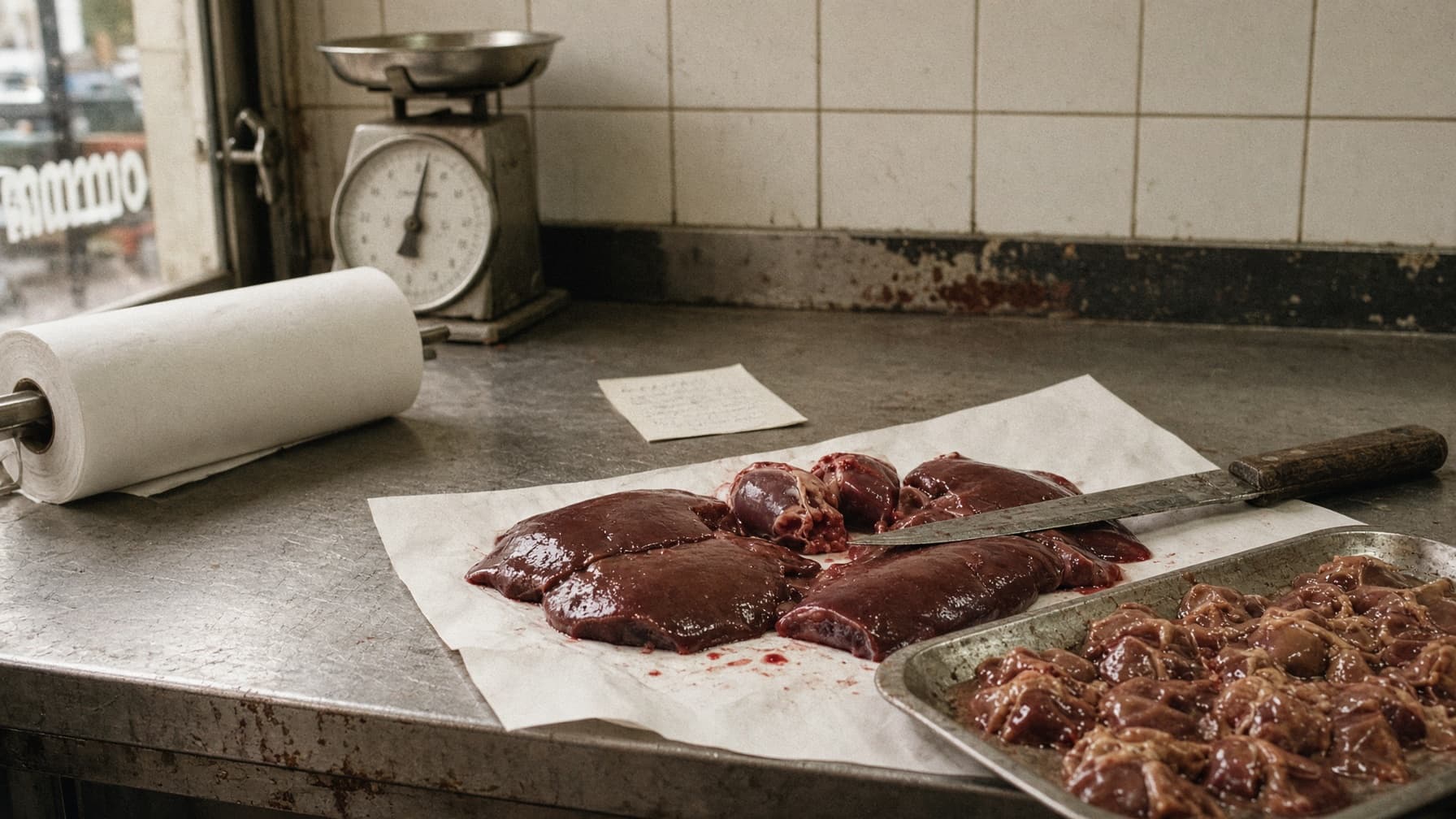
| 5–7 | Optional small liver (20–40 g) or heart | No monster organ portion on the first weekend |
Too much liver at the start rarely feels “nutrient dense.” It feels like nausea and a metallic aftertaste that sits all day. Anyone who has tried 200 g on a Sunday rarely repeats the mistake.
Animal-based in the same week: same meat base, plus a limited amount of fruit or honey if that is the plan. Dosed on purpose. Not the entire fruit aisle.
Practical rules for the seven days:
- Eat until you are full. Undereating is the common beginner error. A lot of people underestimate that in the first weeks because meat feels “heavy” and the plate looks smaller than before.
- Salt to taste. In the transition, most people need more than the public “less salt” message suggests. Rigid milligram targets without blood-pressure, kidney, and medication context are risky. Longer version: electrolytes.
- Coffee and tea are weekday life. If sleep or the stomach protests: drink less, do not debate it.
- Weigh rarely, if at all. Water and glycogen loss in week 1 say little about fat mass.
- Note three things: energy, stool, sleep. More tracking usually just manufactures anxiety.
Thirty days: the frame becomes a week
Days 8–30 live in more detail in the first 30 days. Short version:
- Simplify meals. Two or three similar plates, not twelve recipes. Bone broth and steaks are enough technique.
- Organs small and regular. Not a challenge.
- Budget for social friction. One sentence for invitations beats a manifesto. In restaurants, a lot of people take the sauce anyway. Not because the plan was wrong — because hunger and habit are faster than theory.
- Sort symptoms, do not reframe them: transition symptoms. Anything that gets worse after three to four weeks instead of better is not a healing crisis.
- Do not misuse labs in week 2 as a success check. Better: a baseline before you start, or after 8–12 weeks with context. See lab panel.
After 30 days, decide on purpose: stay tight, open animal-based, or stop. Stopping is not failure. If you go back to omnivorous eating for good, do it as a plan — not as a punishment.
Shopping list
A start list. Not a lifestyle catalog. Quality and pasture are their own topics (sourcing, budget). Honest meat is enough to begin.
Core
- Beef mince, higher-fat mince, or cheap stewing cuts
- One fatter cut for the pan (chuck, brisket, rib — whatever is there)
- Butter or ghee; optional beef tallow from the butcher or a jar
- Salt without unnecessary blends
- Eggs, if they are in your variant
If the stomach and the wallet play along
- Chicken liver or beef liver in a small amount
- Bones for broth, or ready broth
- Fatty fish now and then (iodine, omega-3) — keep mercury and origin in view
Not needed to start
- Specialty pans, “carnivore electrolyte stacks,” powdered organs, imported wagyu
- Twelve spice blends. Pepper is optional.
Ordinary supermarket meat is enough for the start. Pasture or organic can come later. Letting week one fail on that is unnecessarily expensive.
What this page deliberately does not do
No individual calorie or macro targets. No treatment of autoimmune disease, depression, or “leaky gut.” And no claim that strict carnivore is the only rational endpoint.
Animal-based eating and a well-planned omnivorous diet remain the more durable solution for a lot of people. CarnivoreCore separates the approaches and names the limits.
The next click
No variant yet?: carnivore vs. animal-based.
Variant clear: the first 30 days.
Unsure whether you should start at all: red flags.
What actually goes wrong in week one
The theory rarely holds on a Wednesday night. A few patterns repeat.
Undereating. Meat fills you fast. The plate looks smaller than the old plate with a side. A lot of people read that as “finally less appetite” and land at 900 kcal. Then come head pressure, irritability, bad sleep — and the diagnosis “I don’t tolerate carnivore.” Eat first, interpret later.
Salt by the public message. Anyone who has heard “less salt” for years salts timidly in week 1. With glycogen and water leaving at the same time, that is the fastest route to cramps and the feeling that the ceiling is too low. Salt to taste, water with it, do not forget medications and the kidney. No gram number from a reel.
Identity before observation. The sentence at the table (“I’m only eating animal foods right now”) becomes more important than stool, sleep, and hunger. Then every deviation is betrayal. That is not a nutrition protocol. That is theater. Anyone who stops after 30 days has collected data.
A weekday catalog, not just a sketch
The daily examples stay short on purpose. The gaps that page does not cover:
- Shift work: the large meal after the shift, not “fasting because it sounds carnivore.” Sleep beats macro aesthetics.
- Cafeterias: order meat without sauce, leave the side, or take it home and add fat later. Perfection in a canteen is rare. Repeatability counts.
- Family: one pot for everyone, your share without sauce/potato. Separate religions at the stove break households faster than missing pasture beef.
- Travel: on the road first. Jerky and hard-boiled eggs are boring and they work.
- Organs: do not force them in week 1. If the butcher can supply them: portion small. Longer version: sourcing organs.
Stopping without staging it as drama
After 30 days, three honest options:
- Stay tight, because digestion, skin, or simplicity carry it.
- Open animal-based (fruit, honey, dairy by tolerance).
- Planned omnivorous return: starch sides in small amounts first, then whatever caused trouble before, one at a time. Not pizza as punishment on day 31.
If you started on medication, you do not walk that road back alone. Reintroducing carbohydrate changes insulin need — someone who can adjust the dose should know.
Sources
- CarnivoreCore working definitions — see the contrast article
- NIH ODS – Sodium Fact Sheet (electrolyte context, not carnivore-specific)
- NIH ODS – Iodine Health Professional Fact Sheet
- EFSA – Dietary reference values for sodium (context, not a carnivore guideline)
This content is general information. It is not medical, dietetic, or diagnostic advice.