Carnivore and animal-based on the road
Practical tactics for travel, the office, restaurants, and being out — without perfectionism and without constant explaining. Kitchen access versus fully mobile.
This article contains affiliate links (ad). Details under Transparency.
Auf einen Blick
- On the road, implementation fails more often on logistics than on theory.
- Two cases: access to a kitchen versus fully mobile.
- Simple, portable options and clear ordering beat complicated systems.
- Hard-boiled eggs, jerky, shaved Parmesan, and prepped meatballs cover most situations.
Stance
The road is not the place for ideological purity. The goal is to eat enough, with some control, without turning every meal into a project. People who constantly explain, justify, or improvise burn more energy than they need — and you feel that by day three of a trip. Two situations split cleanly: access to a kitchen versus fully mobile.
Good for travel (fully mobile)
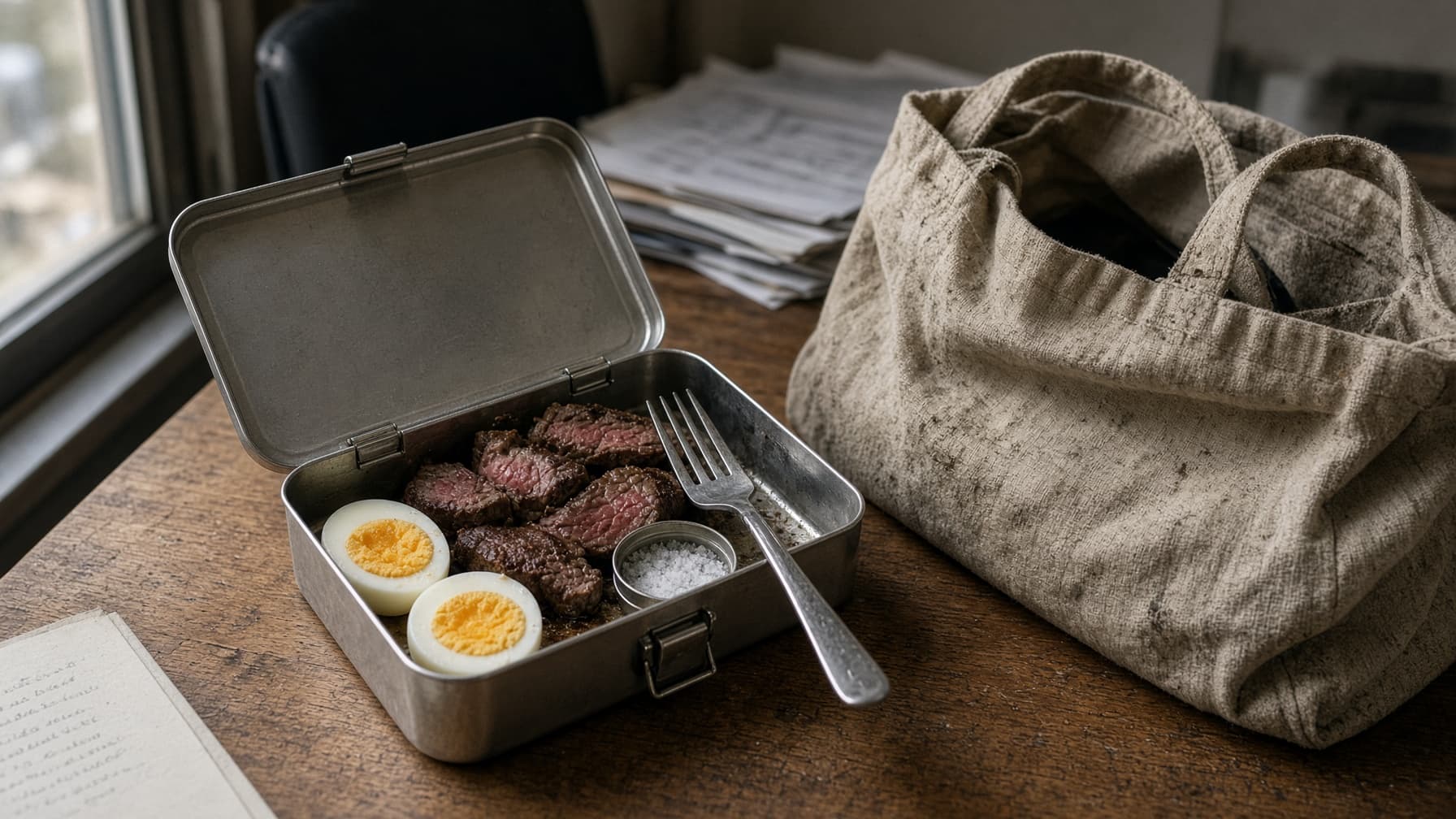
Shelf-stable and light on refrigeration: beef jerky or dried steak strips (read the ingredients — no sugar, no seed oils), hard-boiled eggs as the actual base, and shaved Parmesan, which is underrated. Those three already cover a lot. Parmesan adds protein and flavor and works in the gap when the next real meal is still hours away.
With a kitchen (or a microwave)
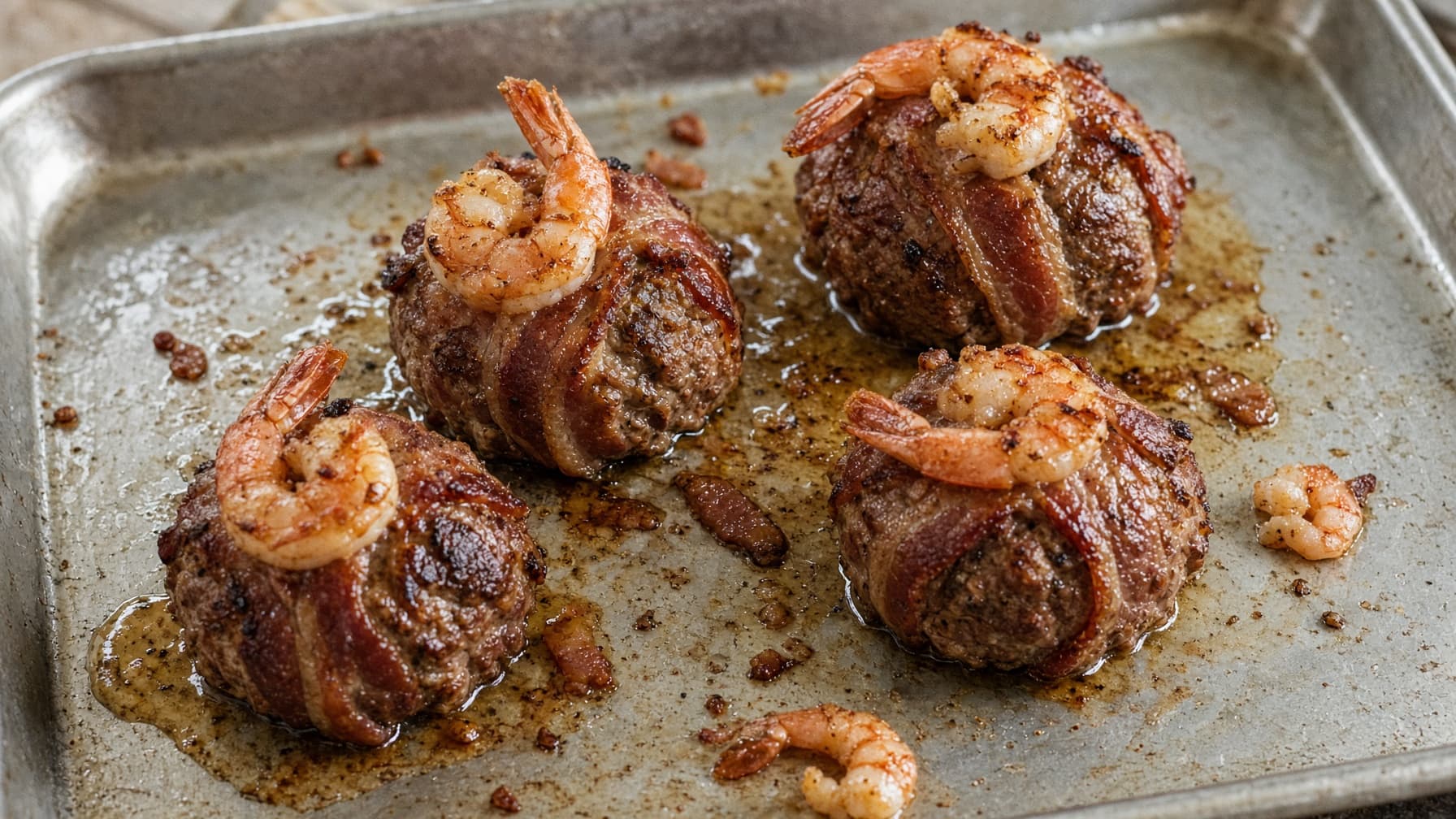
This is easier. The surf-and-turf meatballs travel chilled, or frozen in the morning bag and reheated at lunch. A few hours unrefrigerated is usually fine. Hard-boiled eggs alongside, or yesterday’s cooked meat in a tight container. Meatballs plus eggs cover most lunches without cooking on site.
For the hardcore: heavy cream
A cup of organic whipping cream as a “drink” supplies fat and sits in almost every supermarket. It also contains carbohydrate, so treat it as a fallback or a deliberate exception — not the default. Some people use it regularly anyway. Others would rather skip it.
Office and weekday travel
Prep that actually works: cooked or pan-fried meat from the day before in a tight container, hard-boiled eggs and cheese, jerky without sugar or seed oils, shaved Parmesan. What often fails: meal-prep routines that are too complicated and get abandoned after two weeks, and “keto”-labeled products that still hide sugar, maltodextrin, or vegetable oil.
Restaurant and cafeteria
Order clearly and politely: unbreaded meat, fish, or eggs; ask for fat (butter, tallow, the meat’s own fat — not “the kitchen oil”); skip sauces and marinades or get them on the side and check; drop the sides without a speech. A lot of kitchens can do that. Some cannot.
Travel (car, train, plane)
Short hop: prepped meals plus jerky, eggs, Parmesan, and salt. Longer: a supermarket at the destination (meat, eggs, butter) beats endless restaurant roulette. Flight: shelf-stable options within security rules; shop quickly on arrival. Do not forget salt and electrolytes — air-con and travel dryness often raise the need.
Social situations
“I’m mostly eating meat and fat right now” is usually enough. Long justifications only create resistance. If someone asks, give a short answer. If they do not ask, they do not need a sermon. That saves energy you can spend on the actual food.
Practical checklist
One reliable portable protein (eggs, jerky, prepped meat, or meatballs), one fat source (butter, tallow, fatty meat, Parmesan, cream if needed), salt, a plan B if the first option fails, and no inflated expectation of perfect meals on the road. That is enough.
Further reading
Sources
- Editorial practice recommendations, CarnivoreCore
This content is general information. It is not medical, dietetic, or diagnostic advice. This article contains affiliate links (ad). Details: Transparency.