Recipe
Fried eggs with cream
Eggs cooked in slightly reduced cream — soft, mild, no hard crust. A simple pan method that changes the character of the eggs.
This article contains affiliate links (ad). Details under Transparency.
Auf einen Blick
- The eggs cook in a thin layer of slightly reduced 10% cream. Not in butter or oil.
- Residual heat instead of high heat gives a lightly fluffy texture.
- No hard underside. You get the mild sweetness of the cream instead.
In short
Instead of butter or oil, a little 10% cream goes into the pan and is reduced slightly. The eggs finish on lowered heat or residual heat. Lightly fluffy texture, a mild note from the cream.
If you want a brown, crisp crust under the egg, this is the wrong page. If you like soft, even fried eggs, try it once.
Ingredients
- Eggs (as many as hunger asks for — 4 is a typical plate)
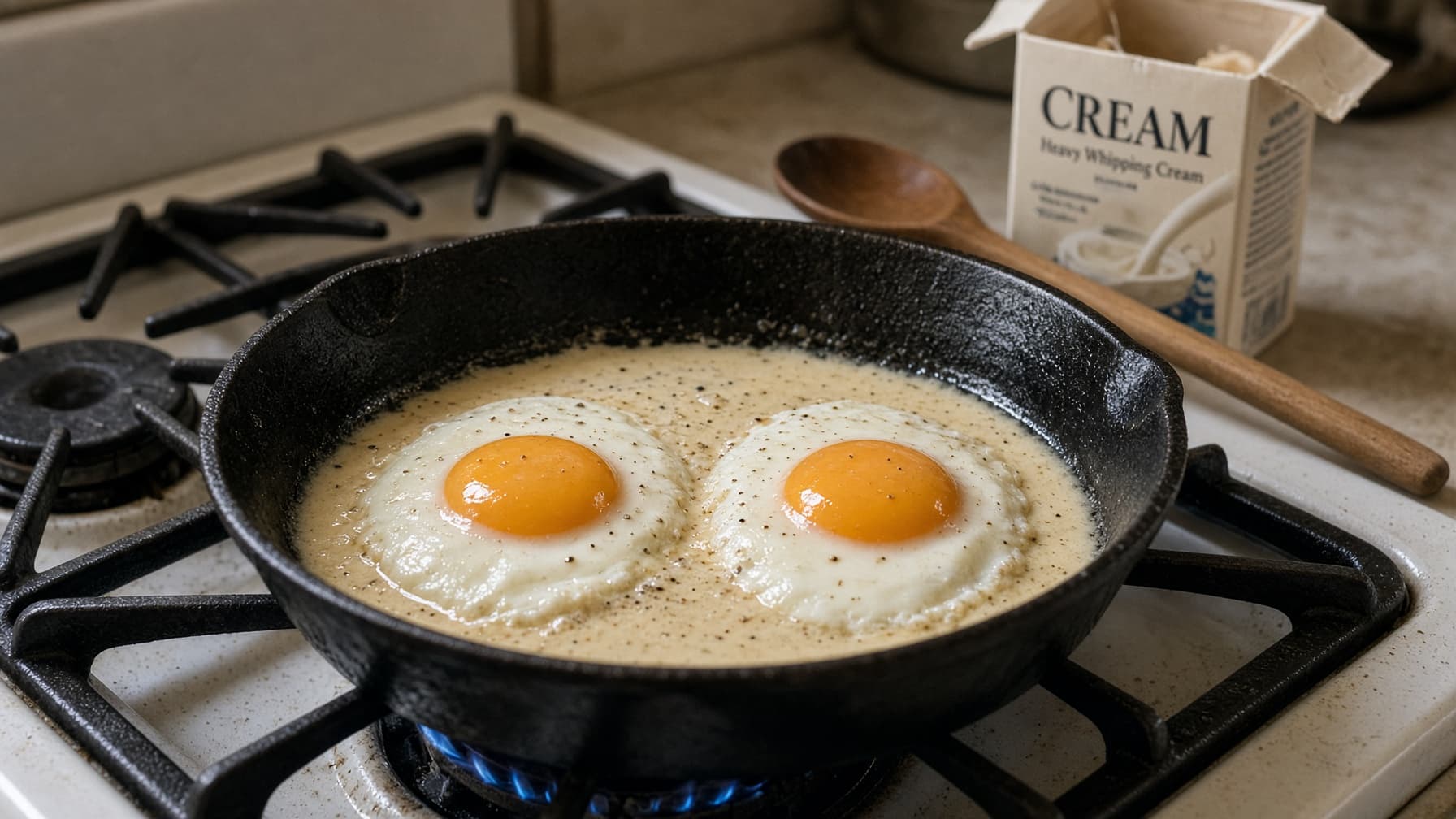
- 10% cream (not a flood, not a smear — a thin film on the pan floor; a little foam is fine)
That is the list. Salt (ad) to taste.
Method
Pour some cream into the pan — enough for a thin layer, not so much that the eggs swim.
Heat the cream and let it reduce slightly.
Tilt and swirl so it covers the pan evenly. A little foam is still allowed.
Crack the eggs into the pan.
After a short moment, switch the burner off (ceramic) or turn it down hard (induction — do not kill the heat completely).
Let residual heat finish the eggs for a few minutes, to the doneness you actually want.
They turn slightly fluffy and pick up the mild sweetness of the cream.
Practice notes
Amounts and timing are experience. Watch the first batch.
Too much cream makes the eggs sloppy. Too little dries the pan floor.
Residual heat is the point. High heat to the end kills the effect.
A poor fit if you want a hard, crisp underside.
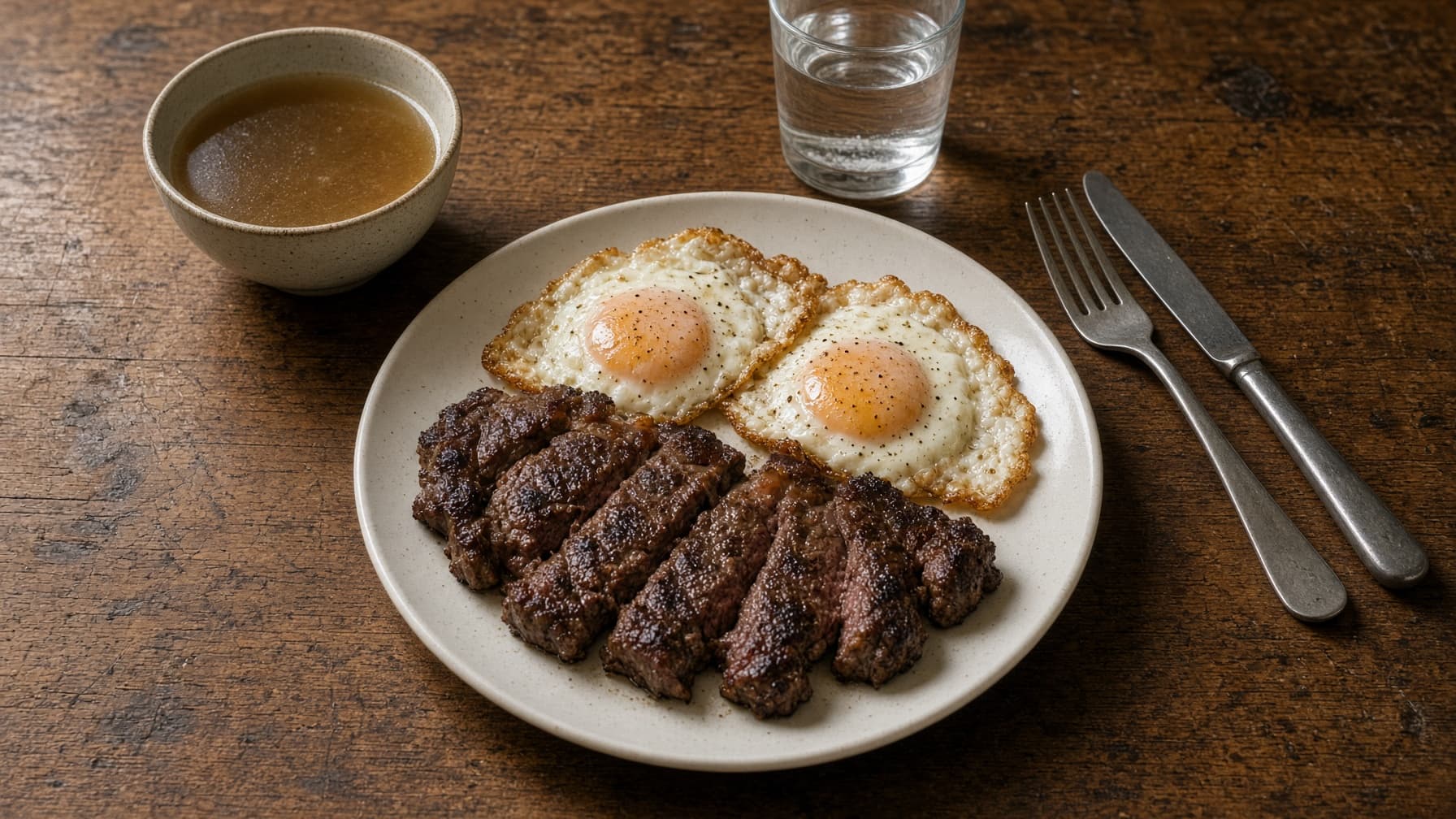
Works next to steak or other meat — four of these in the evening is a normal plate.
A small change to the classic method. It changes the character more than it looks like it should.
Read next
This content is general information. It is not medical, dietetic, or diagnostic advice. This article contains affiliate links (ad). Details: Transparency.