Tools and gear for a carnivore kitchen
What actually helps — pans, boards, knives, tallow, salt — and what is marketing ballast. Affiliate links marked.
This article contains affiliate links (ad). Details under Transparency.
At a glance
- A few good tools beat a drawer full of specialty gadgets.
- Cast iron, a solid board, a sharp knife, and a fat that takes heat cover most of the job.
- Affiliate links are marked. Quality and use come before commission.
The basic rule
The kitchen does not need much technique. What counts is controlling heat and fat, cutting and turning meat and organs cleanly, using leftovers and bones, and not being helpless on the road. Everything else is optional.
Core kit
Pan / pot
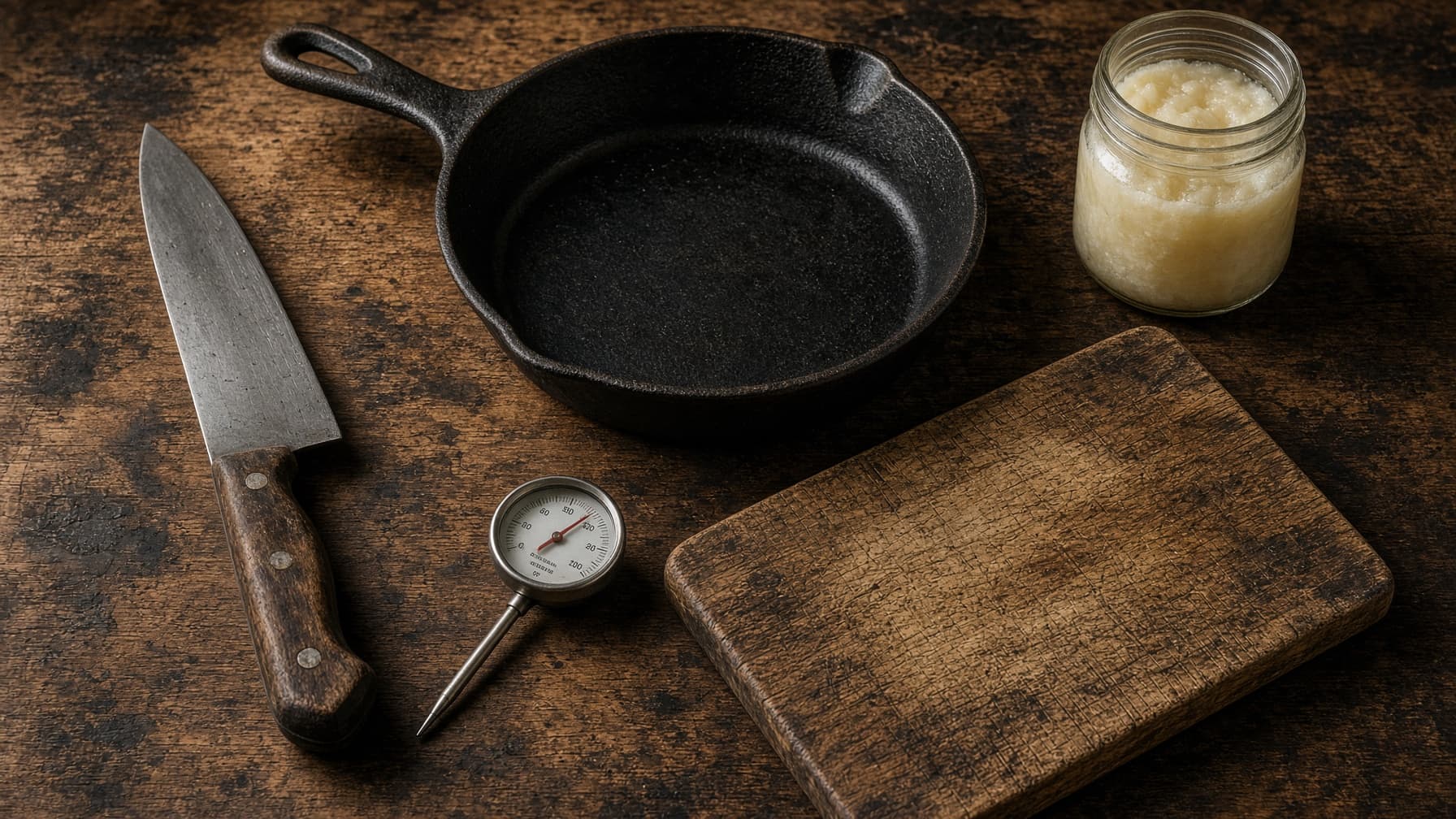
A cast-iron skillet or a heavy stainless pot covers frying, searing, and longer cooking. Nonstick is not required and is often fragile.
Cutting board
A thick wood board is kind to knives and stable enough for larger cuts. Plastic works too. Wood lasts if you oil it and do not dry it out in the dishwasher.
Knife
One sharp chef’s knife and maybe a small boning knife are enough. Expensive sets are rarely the bottleneck. Sharpness and handling are.
Fat for the pan
Beef tallow takes high heat, tastes neutral to mild, and fits the logic. Butter is for lower temperatures and flavor.
Salt
Coarse or fine sea salt, or steak salt without unnecessary extras. In the transition phase often more important than most people think.
Examples (ad, locale-specific links): Cast-iron skillet, Solid wood board (acacia) (ad), Boos Blocks Mystery Oil (board oil) (ad), Vilgain grass-fed beef tallow, Ankerkraut salt flakes (steak salt).
Useful, not required
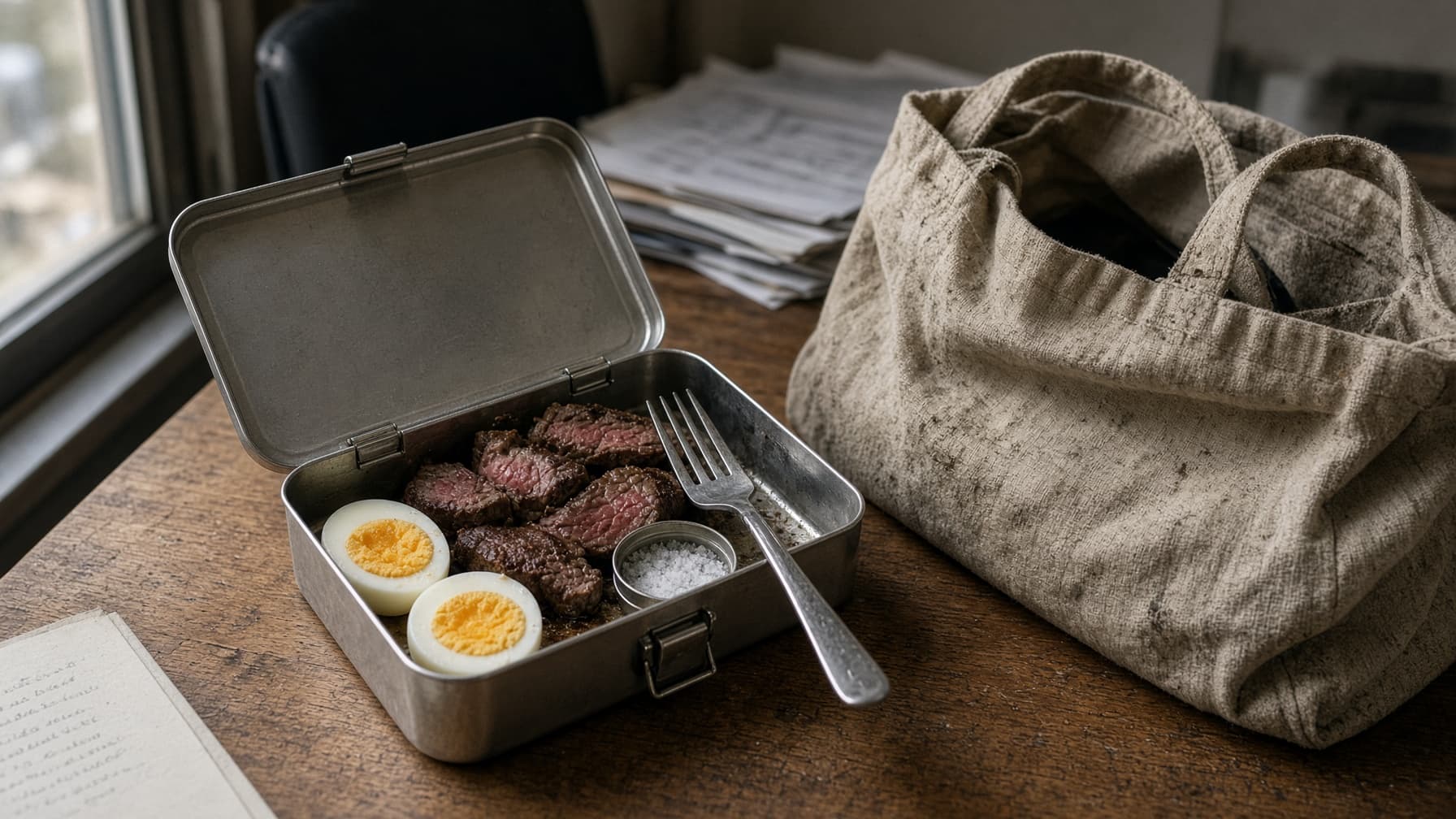
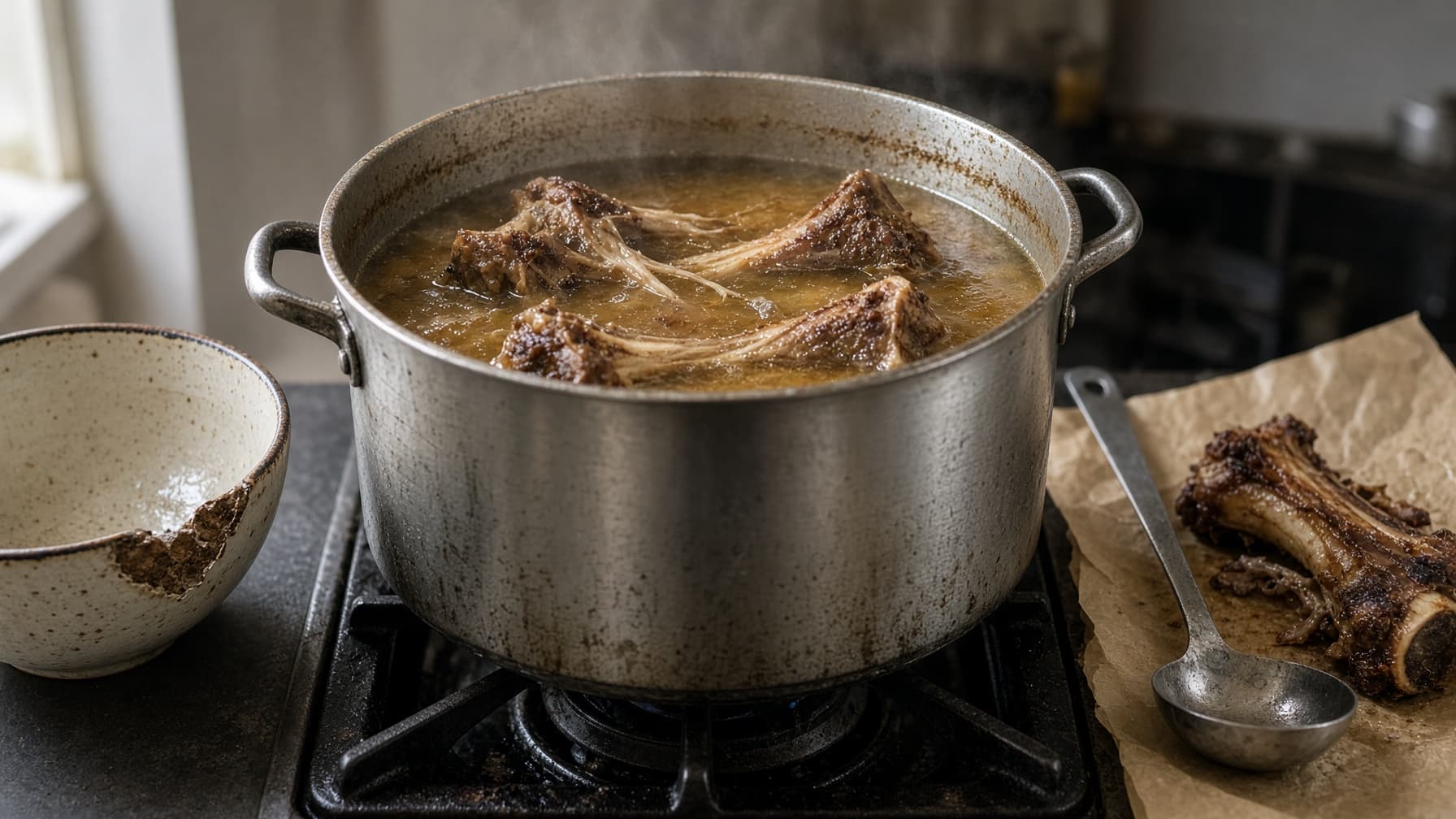
A slow cooker or pressure cooker for bone broth and tough cuts. A vacuum sealer or good freezer boxes. A thermos for broth on the road. Simple lunch boxes.
On the road
For travel and the office: clean beef jerky without sugar or seed oils as a fallback. Read the ingredients. Details live in eating out and travel.
Examples (ad): Vilgain Beef Jerky / dried steak strips (organic), Dried beef-liver capsules.
If a product has no link in your language, the name still stands as a category, not a dead button.
What you do not need
Specialty gadgets “only for carnivore.” Twelve kinds of salt. Expensive nonstick systems that are junk after two years. Gadgets that cost more storage than they return in use.
Books (orientation)
If you want to go deeper, read critically. An introductory carnivore book and the curated resources page are orientation, not scripture.
Further reading
Sources
- Editorial kitchen practice and product categories, CarnivoreCore
This content is general information. It is not medical, dietetic, or diagnostic advice. This article contains affiliate links (ad). Details: Transparency.