
Mechanism
Electrolytes and sodium needs in the carnivore transition
Why low-carb and strict carnivore can shift sodium balance, which symptoms are typical, and where the evidence stops.
This article contains affiliate links (ad). Details under Transparency.
Auf einen Blick
- Lower insulin and glycogen breakdown promote natriuresis. A higher salt need in the transition is physiologically plausible.
- Weakness, head pressure, and palpitations are nonspecific. Not every complaint is electrolytes.
- Blanket milligram targets without context (blood pressure, kidney, medications) are risky.
- Potassium and magnesium belong in the discussion, with different safety limits than table salt.
The mechanism, short
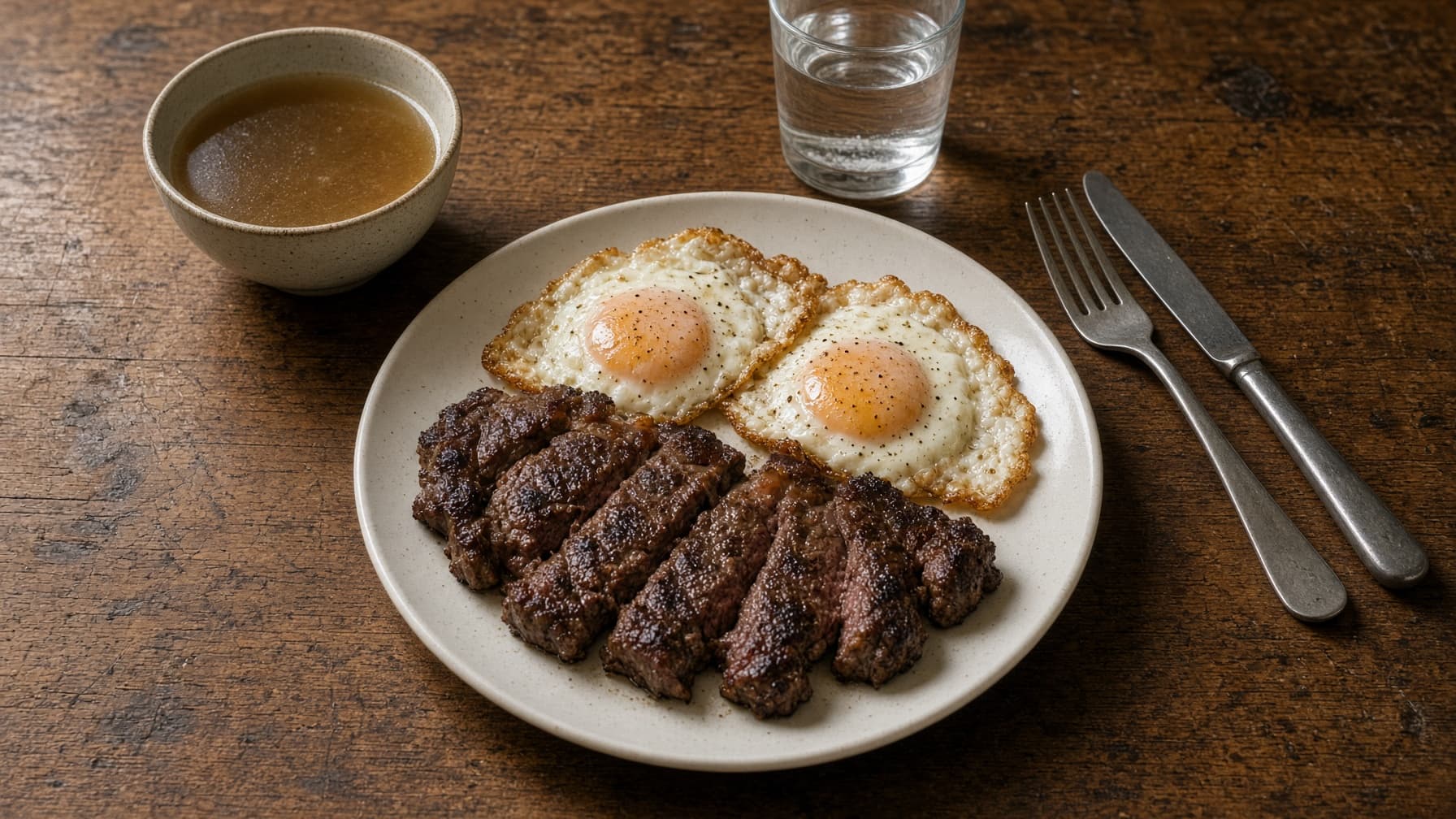
Carbohydrate restriction lowers circulating insulin in many people. Insulin affects renal sodium retention: less insulin → a tendency toward more sodium excretion (natriuresis). At the same time, glycogen stores shrink. Each gram of glycogen binds and then releases several grams of water. Net effect of the first days: often a noticeable loss of water and sodium.
That is why people in the first days of a strict carnivore or keto stretch often feel “empty,” weak, and headachy. Abruptly less salt than before makes it worse. Physiological adaptation. Not a detox.
Sodium — typical clues
Often reported, and they can fit electrolyte shifts (they do not prove them):
Orthostatic weakness or “dizziness” on standing
Headache or dull head pressure
Reduced performance, early fatigue
Cravings, irritability, low mood
Muscle cramps (often also magnesium, fluid, load)
A sense of palpitations. Not every one of these is “just sodium.” Sleep debt, too few calories, too little fat, caffeine, stress, and expectation ride along.
A practical stance
Salt to taste. In the transition, most people need more than the public “less salt” message suggests. Salt until it tastes right and the symptoms ease. Rigid milligram targets without blood-pressure, kidney, and medication context are risky.
Trial magnesium (glycinate or citrate) in the evening if cramps or sleep are the problem. A lot of people get by with a salt shaker and one simple magnesium product. A plain electrolyte mix without sugar can make the logistics easier. It is not required.
Medications and existing conditions
Fewer carbohydrates and a different salt load shift the need for some drugs. Insulin, other diabetes drugs, diuretics, and blood-pressure meds belong with a clinician before the carbohydrates drop. That is not an optional tip.
Further reading
Sources
- Physiology of insulin, sodium retention, and low-carb — textbook knowledge / reviews of ketogenic diets
- NIH Office of Dietary Supplements – Magnesium, Potassium Fact Sheets
This content is general information. It is not medical, dietetic, or diagnostic advice. This article contains affiliate links (ad). Details: Transparency.