Labs
Labs on carnivore: a useful panel, not a collection album
Which blood work makes sense on a carnivore pattern — thyroid, ferritin, kidney, lipids, inflammation — and what you should not titrate in a forum.
Auf einen Blick
- A useful panel is short, repeatable, and tied to a clinical question. Not a 40-marker curiosity screen.
- Thyroid, iron status, kidney, and inflammation need context: symptoms, medications, training, a large meat meal before the draw.
- Reference intervals are population statistics. A deviation is not automatically disease. Extreme values are not 'normal for carnivore.'
- Nobody should be titrating troponin, potassium, or extreme TSH in a forum.
A panel, not a collection album
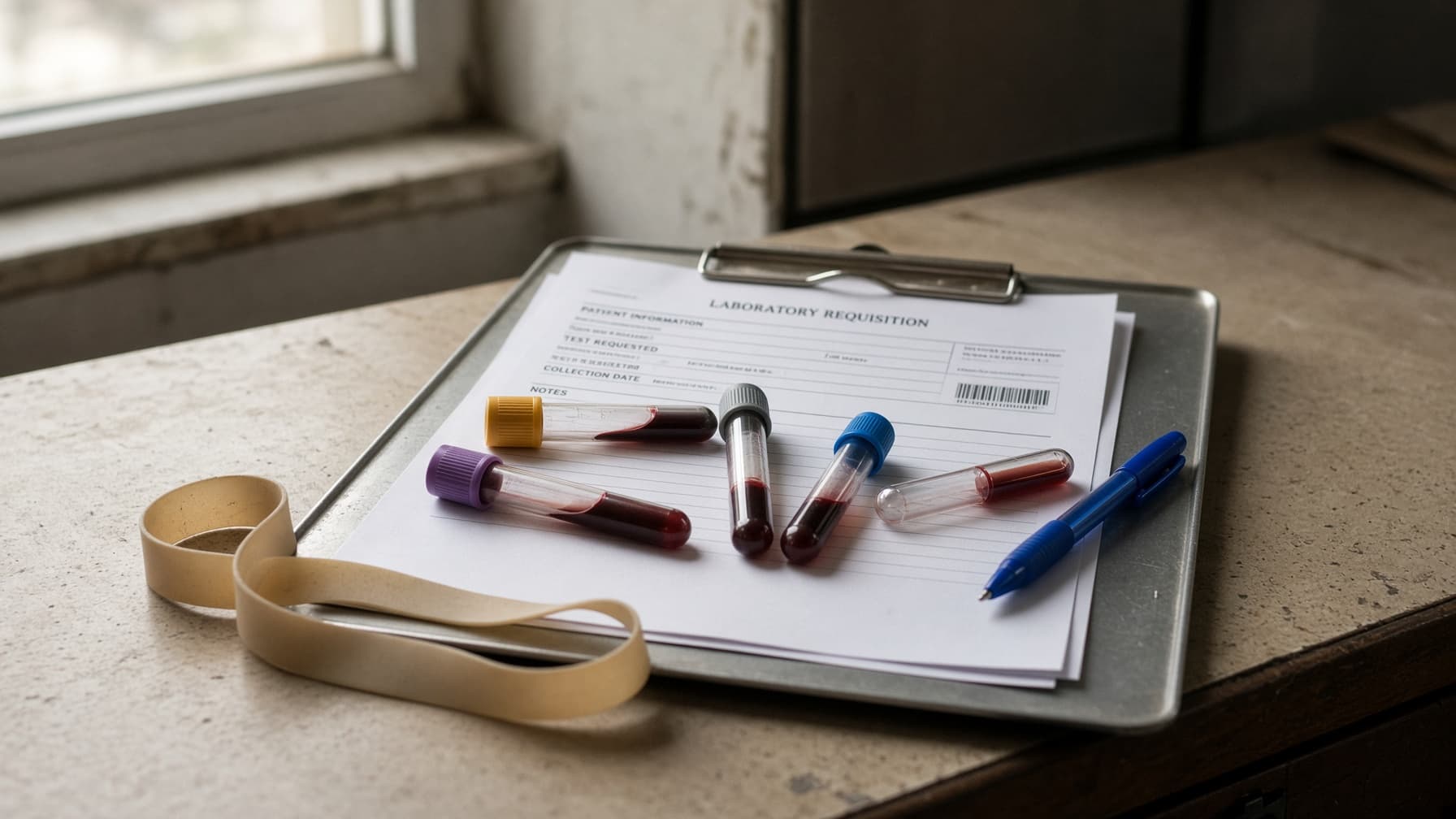
Labs are expensive, anxiety-laden, and useful — in that order, if you use them badly. A good panel answers a question (“What does my iron status look like after a year of a lot of heme iron?”) and gets compared: to you six months ago, not to an influencer. Core panel and optional extras. How to read individual markers lives in the blood-work article. Lipids: ApoB/LDL.
Red flags on the printout
Very high or low potassium or sodium, an acute creatinine jump, extreme TSH, ferritin in the extremes plus symptoms, troponin, glucose off the rails: that is not self-interpretation. See red flags.
When to draw
Before you start, or in a stable omnivorous stretch: a baseline.
Not in week 2 as a success metric. Water, glycogen, calories, and sleep distort the picture.
After 8–12 weeks of a reasonably stable practice — or earlier if there are symptoms.
Fasted, hydrated, no extreme training the day before, and no huge meat meal immediately before a kidney/creatinine draw if you actually care about that marker. Pregnancy, lactation, children, and people with known disease: the panel belongs in the treating clinic.
Core panel (pragmatic)
CBC, ferritin, transferrin saturation or soluble transferrin receptor.
Metabolism: fasting glucose, HbA1c, insulin (optional).
Lipids: total cholesterol, HDL, LDL-C, triglycerides — better with ApoB or non-HDL as well.
Thyroid: TSH, free T4 (free T3 if there is a reason).
Kidney: creatinine, eGFR, cystatin C if needed.
Electrolytes: sodium, potassium, magnesium. Liver enzymes and CRP/hsCRP depending on context.
Further reading
Sources
- CLSI / IFCC – concept of reference intervals (population-based, method-dependent)
- WHO – Haemoglobin concentrations for the diagnosis of anaemia (CBC context)
- Adams & Barton 2007 – Haemochromatosis (Lancet, PMID 18022044)
- Jonklaas et al. 2014 – Guidelines for the treatment of hypothyroidism (ATA, PMID 25266247)
- KDIGO – CKD evaluation and management (eGFR context, not a carnivore guideline)
- Ference et al. 2017 – ApoB and cardiovascular risk (PMID 28330828)
- Pearson et al. 2003 – Markers of inflammation and cardiovascular disease (AHA/CDC, PMID 12551878)
This content is general information. It is not medical, dietetic, or diagnostic advice.