Nutrient profile
Nutrient profile: liver
Retinol, B vitamins, copper, iron, and more — what makes liver so dense, where overdose becomes relevant, and how fresh liver compares to supplements.
Auf einen Blick
- Liver is one of the densest foods there is — especially for retinol, B12, folate, copper, and choline.
- Values vary by species, feed, and data source. Tables are orientation, not a lab guarantee.
- Retinol and copper make 'more is better' risky. Regular small amounts beat rare monster portions.
- Supplements can fill gaps. They do not automatically replace the food-matrix profile.
Role in carnivore and animal-based eating
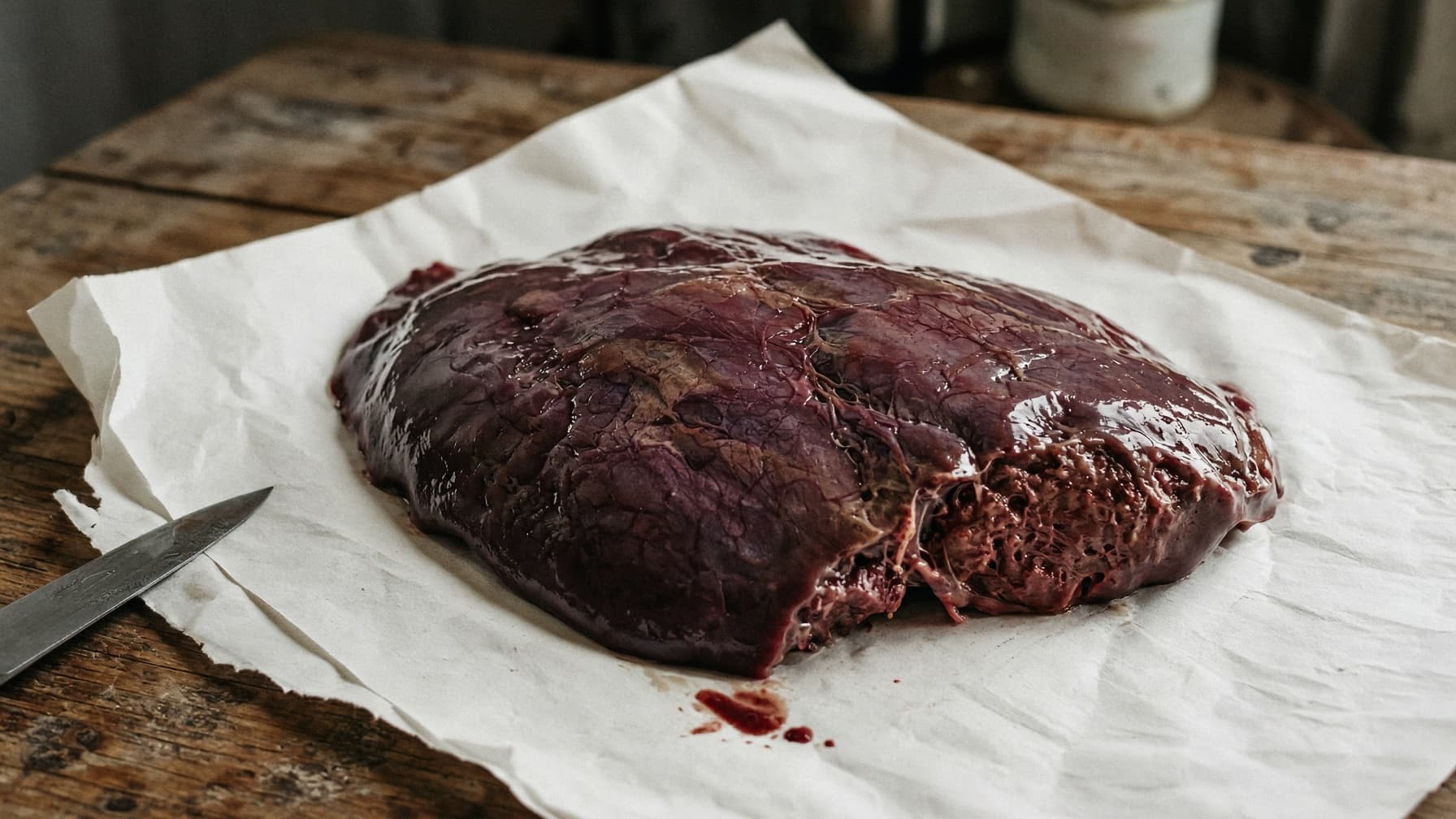
Liver is the classic multivitamin bite in nose-to-tail approaches. Muscle meat alone covers many micronutrients, but not all of them as cleanly. Liver closes typical gaps — retinol, copper, folate, choline, extremely high B12 — already in small portions.
Historically and ethnographically, liver shows up in many traditional patterns as a particularly valued food, often prioritized for children, pregnant people, and people recovering. That is not a proof. It is a hint that the density was noticed long before tables existed. In modern practice, liver is mainly a way to raise micronutrient density without a lot of extra energy or filler.
Orientation values (beef liver)
Rounded per 100 g as an order of magnitude. Values swing with species, feed, freshness, and data source.
Vitamin A (retinol / RAE): very high (often several thousand µg RAE) — the main reason for portion control.
Vitamin B12: extremely high.
Copper, folate, choline: very good amounts.
Chicken liver is milder and often easier to find. Beef liver is denser. Both have a place.
Practical dosing
Small amounts, regularly: 20–50 g once or twice a week is enough for most people. Not a 200 g Sunday challenge. Too much liver at the start often feels like nausea and a metallic aftertaste.
Mix it into mince, with onions (if you are animal-based), or just pan-fry it. Portion fresh and freeze. Nobody needs a plate of liver and nothing else.
Caution and limits
Very high retinol over a long stretch is not harmless. Portion control counts. In pregnancy, and in certain thyroid or metabolic situations, check with a clinician. Liver is not a “more is better” food.
Further reading
Sources
- USDA FoodData Central – Beef liver, raw / cooked
- EFSA / DGE context notes on vitamin A (retinol equivalents) — overview research recommended
This content is general information. It is not medical, dietetic, or diagnostic advice.